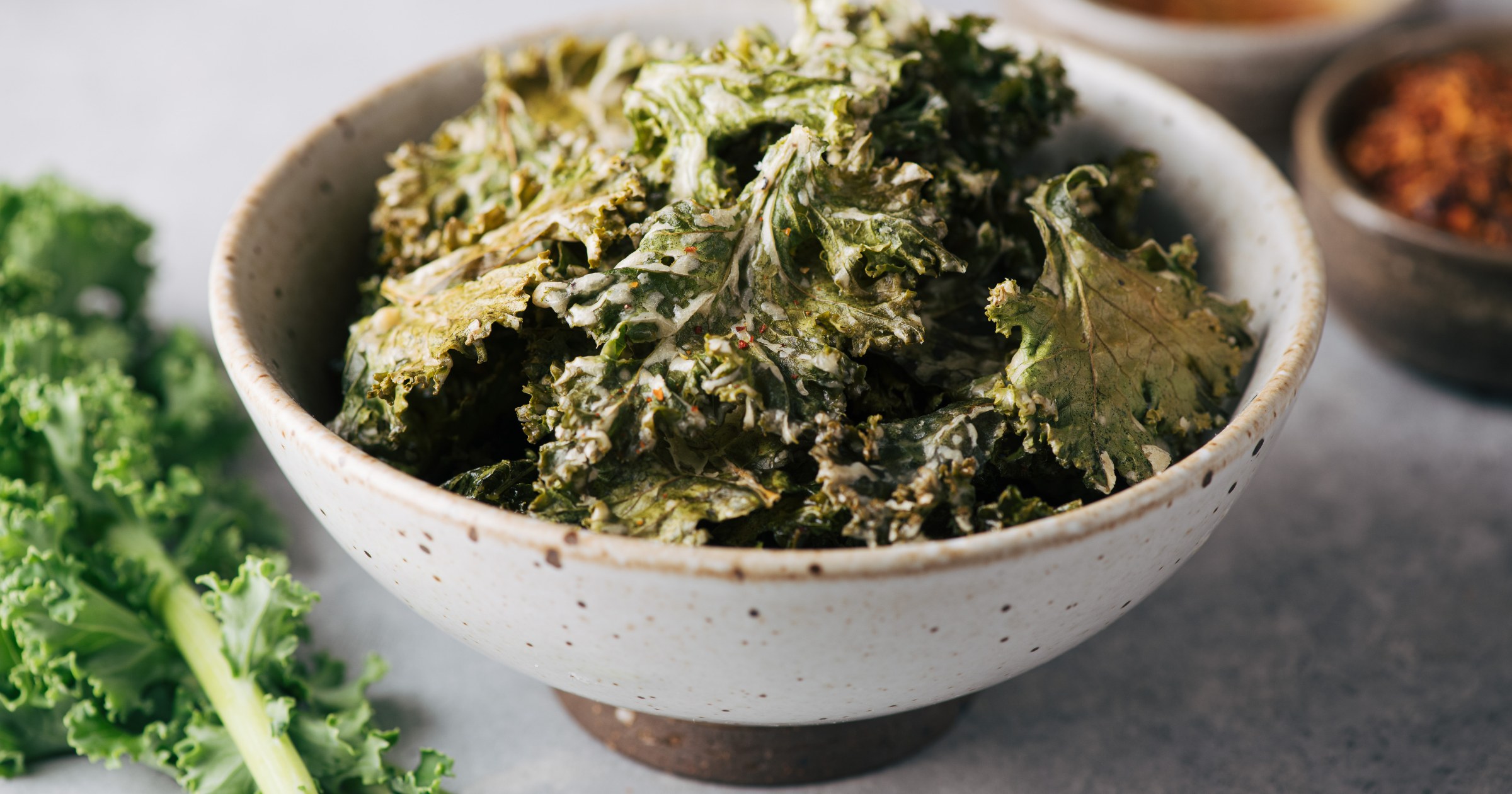
On November 3, 2026, the FDA announced a nationwide recall of Brad’s kale chips over potential thallium contamination. Thallium is a heavy metal most brands have never thought to test for. For QA and QC teams at companies that make or source dried vegetables, greens powders or kale-based products, this recall is worth a close look.
At New Wave Scientific, we test food, supplements and ingredients for heavy metals every day. In this post we cover what happened, where the regulations stand, and the questions quality teams should be asking about their specs, suppliers and testing programs.
What happened: the Brad’s kale chip thallium recall
Snack Right Super Foods, Inc., which does business as Brad’s Raw Chips, is recalling some of its kale chip products because they may contain thallium. The company is based in Coral Gables, Florida.
| Detail | What was reported |
|---|---|
| Products | Brad’s Plant Based Crunchy Kale (2 oz) and Brad’s Veggie Chips Kale (3 oz) |
| Flavors named in FDA records | Original, Cheese It Up, Vampire Killer, Radical Ranch, Veggie Chips Kale |
| Amount in commerce | About 25,000 bags (about 2,097 cases) |
| Distribution | Nationwide through KeHE Distributors and UNFI, October to December 2025 |
| Manufacturer | DESHITEC S.A. de C.V., El Marqués, Mexico |
| Contaminants flagged | Thallium in all listed products; cadmium in several |
Before the recall, the FDA had already acted at the border. In August 2026 it added the Mexican manufacturer and these products to the Red List of Import Alert 99-42. That alert covers foods contaminated with heavy metals. Products on the list can be detained without physical examination when they arrive at a U.S. port.
Thallium has rarely been a concern in food, which is what makes this case stand out. But it isn’t the first time kale chips have come up. In 2022, the California Department of Public Health investigated a family that had elevated thallium in their urine and symptoms after eating kale chips (FDA).
Thallium testing FAQ for QA and QC teams
Is thallium included in a standard heavy metals panel?
Usually not. Most heavy metals panels for food and dietary supplements cover four elements: arsenic, lead, cadmium and mercury. Pull your current certificates of analysis (COAs) and lab reports. If thallium isn’t listed as an analyte with a result, it hasn’t been tested.
Is there an FDA action level or regulatory limit for thallium in food or supplements?
No. The only FDA numeric limit for thallium is 2 parts per billion (ppb) in bottled water, which matches the EPA drinking water limit. For food, thallium is on the FDA’s List of Select Chemicals in the Food Supply Under FDA Review. The National Toxicology Program is running toxicology studies, and the U.S. nominated thallium for JECFA evaluation in 2023.
With no published limit, the FDA judges thallium case by case, as it did with these kale chips. QA teams should treat the lack of a limit as a gap in guidance, not as a sign the hazard can be ignored.
How should we set an internal specification for thallium?
Base it on a documented risk assessment, since there’s no regulatory number to point to. Consider the ingredient’s source, its concentration in the finished product, the serving size and how often consumers take it. Involve your regulatory or toxicology resource, and record the reasoning so you can defend it in an audit. Revisit the spec if the FDA or JECFA publishes guidance.
Does thallium belong in our hazard analysis?
For Brassica-based and dried vegetable ingredients, it should at least be considered. Food facilities must evaluate known or reasonably foreseeable chemical hazards, including heavy metals, under the Preventive Controls for Human Food rule (21 CFR Part 117). Importers must do the same under the Foreign Supplier Verification Program (FSVP). Dietary supplement makers must set component specifications that limit contaminants that could adulterate the product under 21 CFR Part 111. A recall and an import alert naming thallium in kale make it hard to argue the hazard isn’t foreseeable for these ingredients.
Which raw materials are highest risk for thallium?
Prioritize these in your supplier risk assessment:
- Dried or powdered Brassica vegetables: kale, broccoli, cabbage, collards, mustard greens, Brussels sprouts, radish and arugula
- Greens and superfood blends that use those ingredients
- Materials from suppliers or regions without thallium data, including imported materials
- Ingredients from suppliers that have already shown elevated cadmium, since the recalled products carried both
Plants in the cabbage family take up thallium from soil especially well. Levels vary with the soil, so the growing region and the individual field matter.
Why are dried and powdered formats a bigger concern?
Drying removes water but leaves metals in place, so concentration by weight goes up. Chips, capsules and drink mixes also make it easy to consume far more leaf than a serving of cooked greens. To judge the impact on your product, estimate daily intake:
Daily intake = concentration (µg/g) × serving size (g) × servings per day
This is the point the recall makes. An ingredient’s “history of safe use” applies to how it was traditionally eaten, not necessarily to a concentrated new format.
Can we rely on supplier COAs for thallium?
Treat supplier COAs as a starting point, and verify them. Check three things on any COA. Is thallium actually listed as an analyte? Was the testing done at an ISO/IEC 17025 accredited lab, with the method in its scope? Is the limit of quantitation (LOQ) low enough to compare against your spec? Confirm with periodic independent testing, especially for new suppliers and high-risk materials.
Should we test raw materials, finished product or both?
Both, for different reasons. Raw material testing qualifies suppliers and catches problems before they reach production. Finished product testing verifies what consumers actually receive, after blending and concentration. For a high-risk ingredient, start with lot-by-lot testing and consider a reduced frequency once a supplier has a consistent track record.
What test method and reporting should we ask for?
Thallium is typically measured by ICP-MS (inductively coupled plasma mass spectrometry), the same technique used for arsenic, lead, cadmium and mercury. When requesting testing, specify:
- Thallium as a named analyte alongside the four standard metals
- An LOQ low enough to be meaningful against your internal spec
- Results in units that match your spec, such as µg/g (ppm) or µg/kg (ppb)
- Testing of the sample in the form it is sold or used, such as dried powder
What does FDA Import Alert 99-42 mean for importers?
Import Alert 99-42 lets the FDA detain imported foods with heavy metal contamination without physically examining them. Firms and products on its Red List stay detained until they show the problem is fixed. In 2026, the FDA updated the alert to cover imported products with thallium levels that may be unsafe, and the kale chip manufacturer was added in August 2026.
As of October 23, 2026, test results used to get detained food released for arsenic, lead, cadmium or mercury must come from a lab accredited under the FDA’s LAAF program (Laboratory Accreditation for Analyses of Foods).
What are the health effects that justify controlling thallium?
Relatively high acute or chronic exposure can cause gastroenteritis, peripheral nerve damage and hair loss. Very high doses can cause multiple organ failure and death. The FDA says harmful food exposure is uncommon and the effects of low-level exposure are unknown. That uncertainty is a reason to collect data on your own materials now, before guidance arrives.
Does the FDA test foods for thallium?
Yes, and the agency has expanded it. Since 2024, the FDA has tested every food in its Total Diet Study for thallium; before that, only bottled water. It also runs targeted surveys of Brassica foods and infant formula. More FDA data usually comes before more FDA action, so expect more scrutiny.
What brands should do now
If you make or sell products with dried vegetables, especially Brassica greens, now is a good time to review your heavy metals program.
- Map your exposure. List every product and ingredient that contains dried or powdered kale, broccoli, cabbage or other Brassica vegetables. Note where each raw material is grown and sourced.
- Check what your panel covers. Look at your current certificates of analysis (COAs) and lab reports. If thallium isn’t listed, you haven’t tested for it.
- Ask suppliers for data. Request heavy metals results from your ingredient suppliers, including thallium and cadmium. A supplier COA is a starting point, not a substitute for independent verification.
- Test with an independent lab. Third-party testing at an ISO/IEC 17025 accredited lab confirms what’s actually in your raw materials and finished products.
- Test each lot, not just once. Thallium levels depend on soil, so results can change with each harvest, field or supplier. Build ongoing testing into your supplier qualification program.
How New Wave Scientific can help
New Wave Scientific is an ISO/IEC 17025:2017 accredited third-party testing laboratory in Reno, Nevada. We test food, dietary supplements, agricultural products, animal food, beverages and cosmetics for heavy metals. Our other services include microbial contamination, mycotoxins, pesticides, water activity and moisture content.
Recalls like this one are a reminder that a heavy metals program should match how your product is actually made and eaten. Our team can help you decide which elements belong on your panel based on your ingredients, their sources and your product format.
We serve clients nationwide, and we offer local pickup in Las Vegas and Reno for faster turnaround.
Questions about heavy metals testing for your products? Contact us at (775) 525-9444, email info@newwavescientific.com, or visit newwavescientific.com.
Sources
- FDA: Thallium (Chemical Contaminants in Food)
- FDA Import Alert 99-42: Detention Without Physical Examination of Foods Due to Heavy Metal Contamination
- FDA recall announcement: Snack Right Super Foods, Inc. dba Brad’s Raw Chips Recalls Brad’s Crunchy Kale & Veggie Chips Due to Potential Thallium Contamination (November 3, 2026)
- American Chemical Society: Determination of Thallium in Foods Containing Brassica